An air cargo hub in Liège and Budapest
For ViaEurope, CameraInstallatie.nl delivered the complete technology at two locations abroad: all network and fibre cabling, the patch cabinets, the camera, WiFi and PLC networks, the firewall, radio links and Starlink. Coordination, planning, delivery, installation and handover were ours from start to finish, with our own engineers from the Netherlands.
- Liège (BE) and Budapest (HU)
- 14 patch cabinets on two sites
- Our own engineers
- Managed remotely
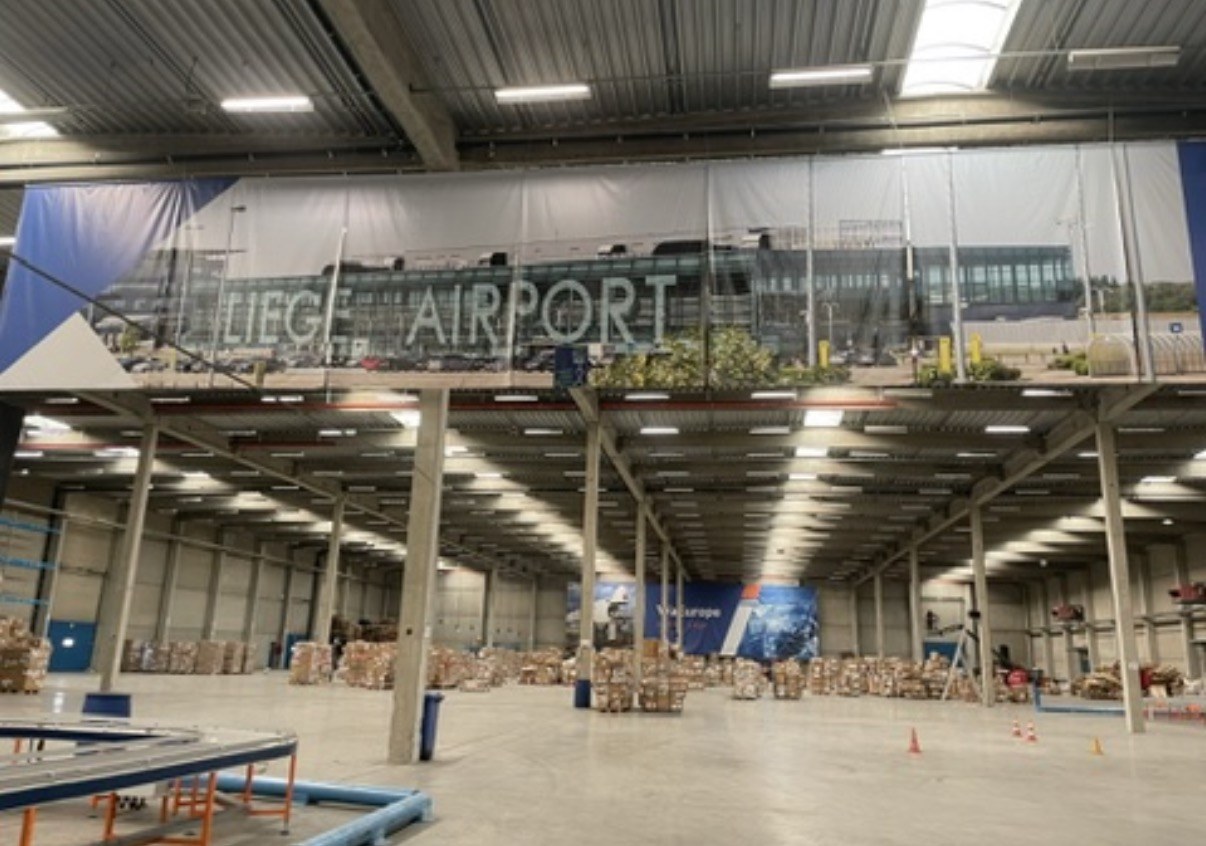
What we did at these two locations
Everything below is work we carried out ourselves. What is not certain, we leave out.
A client who wants the same standard everywhere
ViaEurope handles air cargo and e-commerce shipments. Goods arrive by plane, get sorted in the hub and leave by truck, or the other way round. A hub like that stands or falls with technology that simply works: the network, the scanners, the cameras and the link to the outside world.
We have worked for this client for years, and the question is the same every time. They want it taken off their hands. No problems, high quality, and the same standard at every location they open. Not five parties around the table, but one point of contact who oversees the whole and explains it in Dutch or English.
What they want to know up front is simple, and it decides everything: what do we get, what does it cost and when is it ready. Every company works to a plan, usually with a hard deadline. When a hub opens, it has to run. On projects like this, certainty up front is the real product. Not the box on the wall.
When we say something is ready, it is ready, tested and complete. Not almost. On opening day the client walks in and the network is up, the cameras run, the scanners work and the connection is live. At a location abroad, that is the difference between a planned opening and an expensive surprise.
Sorting and roller conveyors in the hub, controlled over the PLC network.
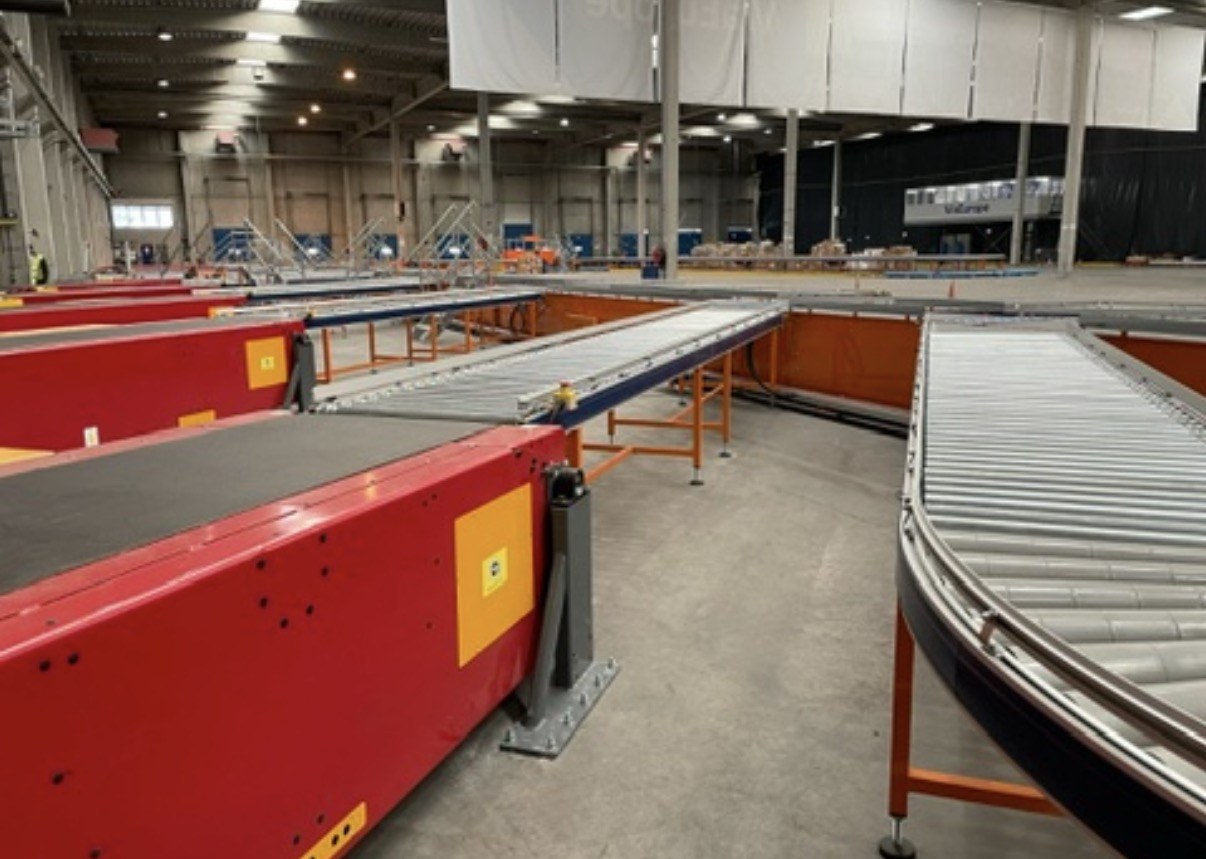
e-HUB at Liège Airport: all the technology in one go
In Liège we laid all the network and fibre cabling and built six technical patch cabinets. From those cabinets the networks split: the camera network, the WiFi, the PLC network for the sorting system and the connections for the monitors in the hall. We also placed and configured the firewall and the Starlink connection.
That PLC network is exactly why this work takes experience. The conveyors are driven by control technology, and it shares the building with camera footage, scanners and office traffic. We keep those flows apart, so a peak on one network does not get in the way of another.
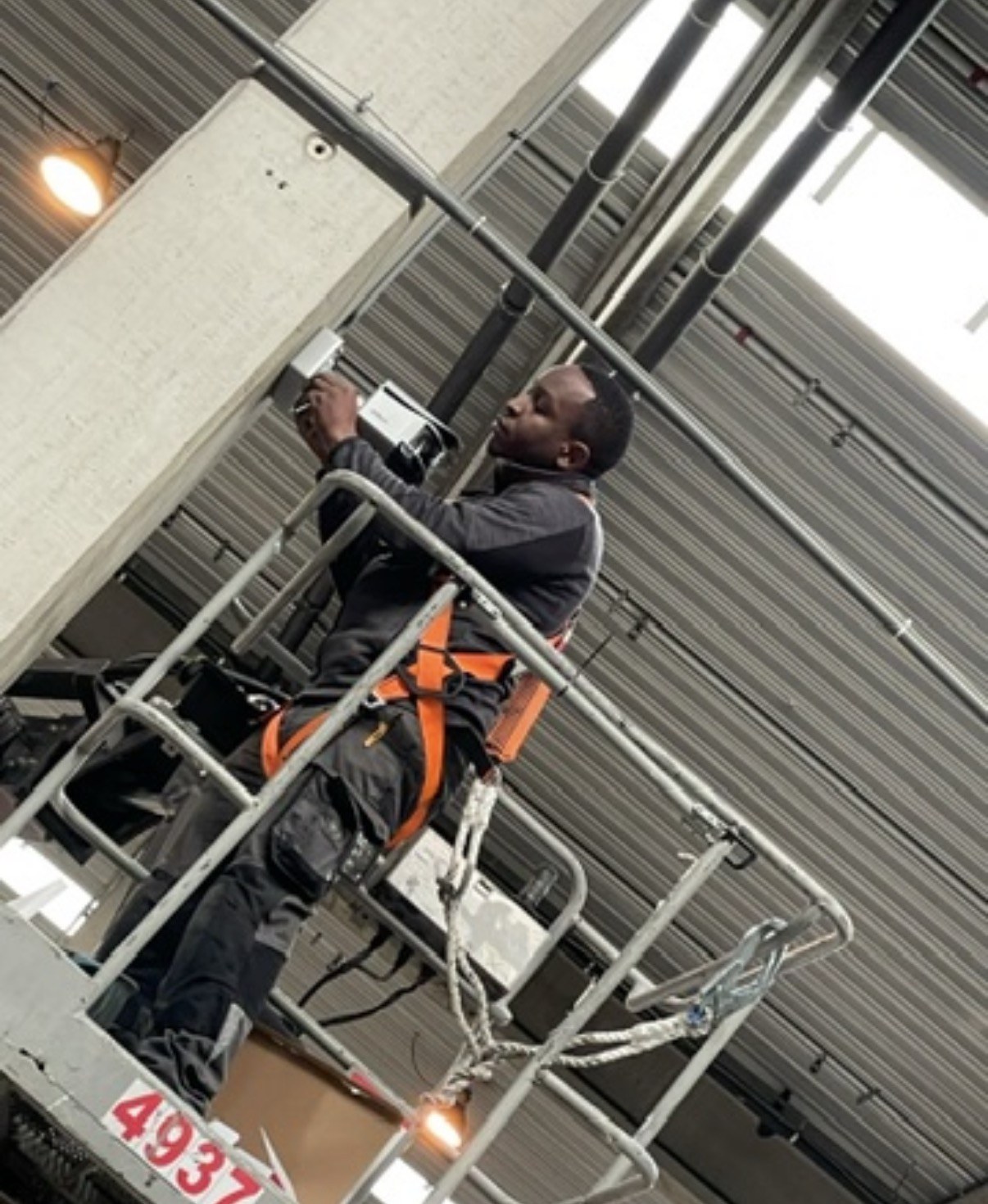
For the cameras we used Dahua, for the network only UniFi. That choice is practical: the whole platform can be managed remotely. We can look in, adjust and maintain it without anyone driving to Belgium. And if something does break, we keep the common parts in stock, so we can act fast instead of waiting weeks for delivery.
A camera being mounted on the concrete beam under the roof.
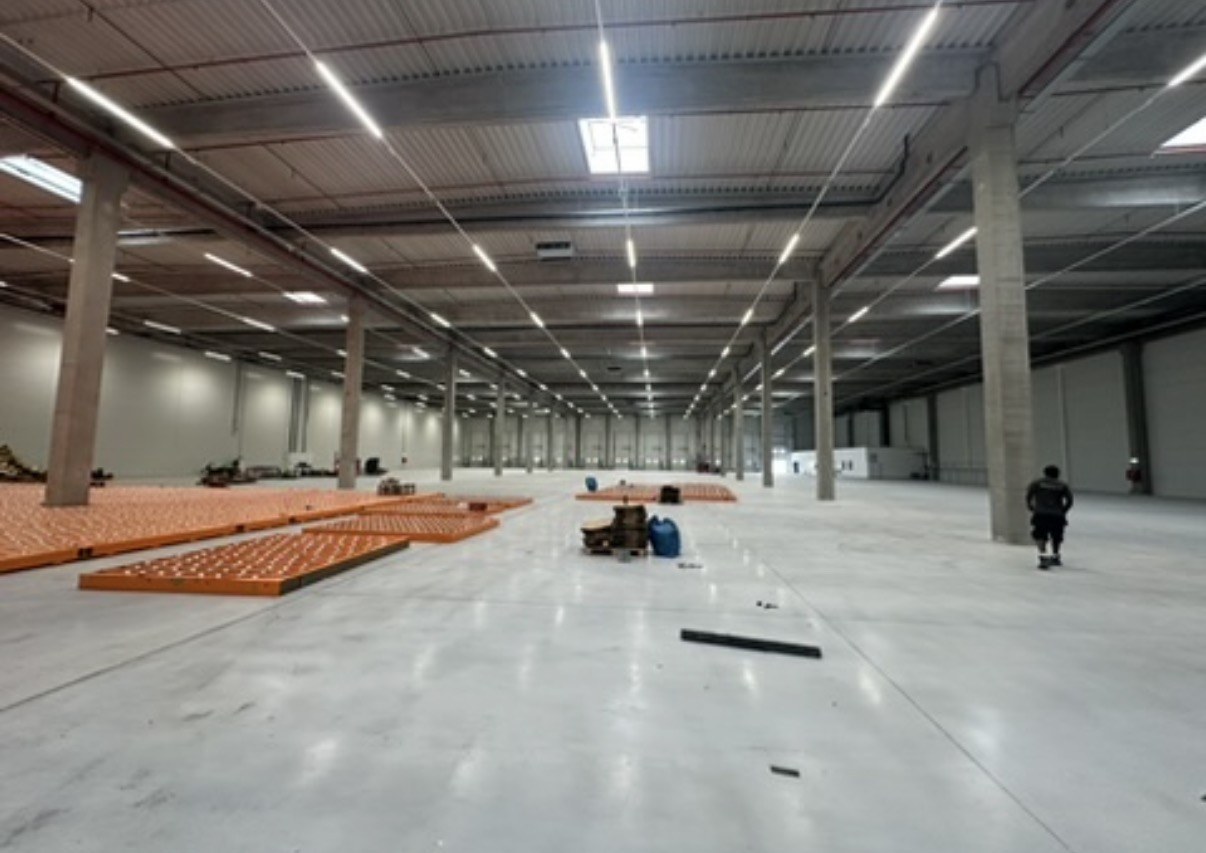
Budapest: almost three months, from empty hall to working building
Here we started in an empty distribution centre. No cabling, no network, no picture. Just concrete, dock doors and a handover date.
In Budapest we pulled all the network cabling and the fibre, laid the camera network and built the complete WiFi and network platform. The internet comes in over Starlink and radio links, often the fastest and most reliable way to get a site like this online. We also fitted out the video meeting rooms and laid the scanner networks that do the real work in logistics.
In total we placed and built eight patch cabinets. That is the heart of the building. Fibre and copper meet there, the PoE switches that power the cameras and access points sit there, and so does the recorder.
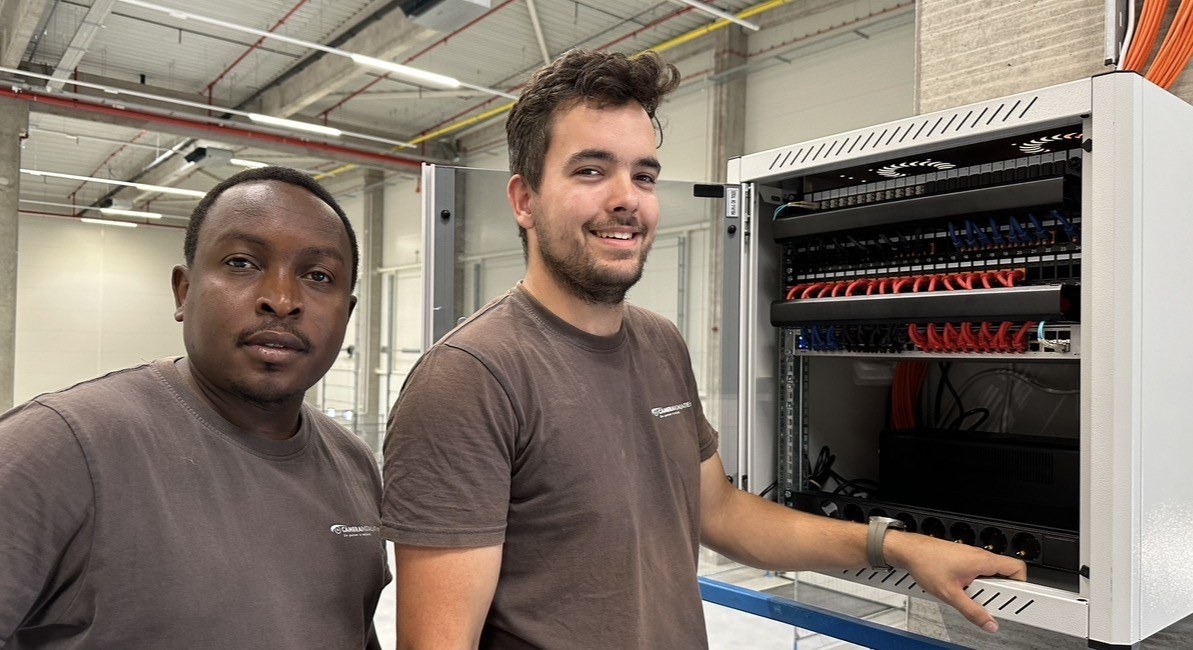
The project ran for almost three months. We sent our own people from the Netherlands to Budapest on purpose. Then you know who is on site, how they work and what quality comes out of it.
The empty distribution hall in Budapest, before a single cable was laid.
From the roof to the cabinet
Photos from both locations, taken by our own team.
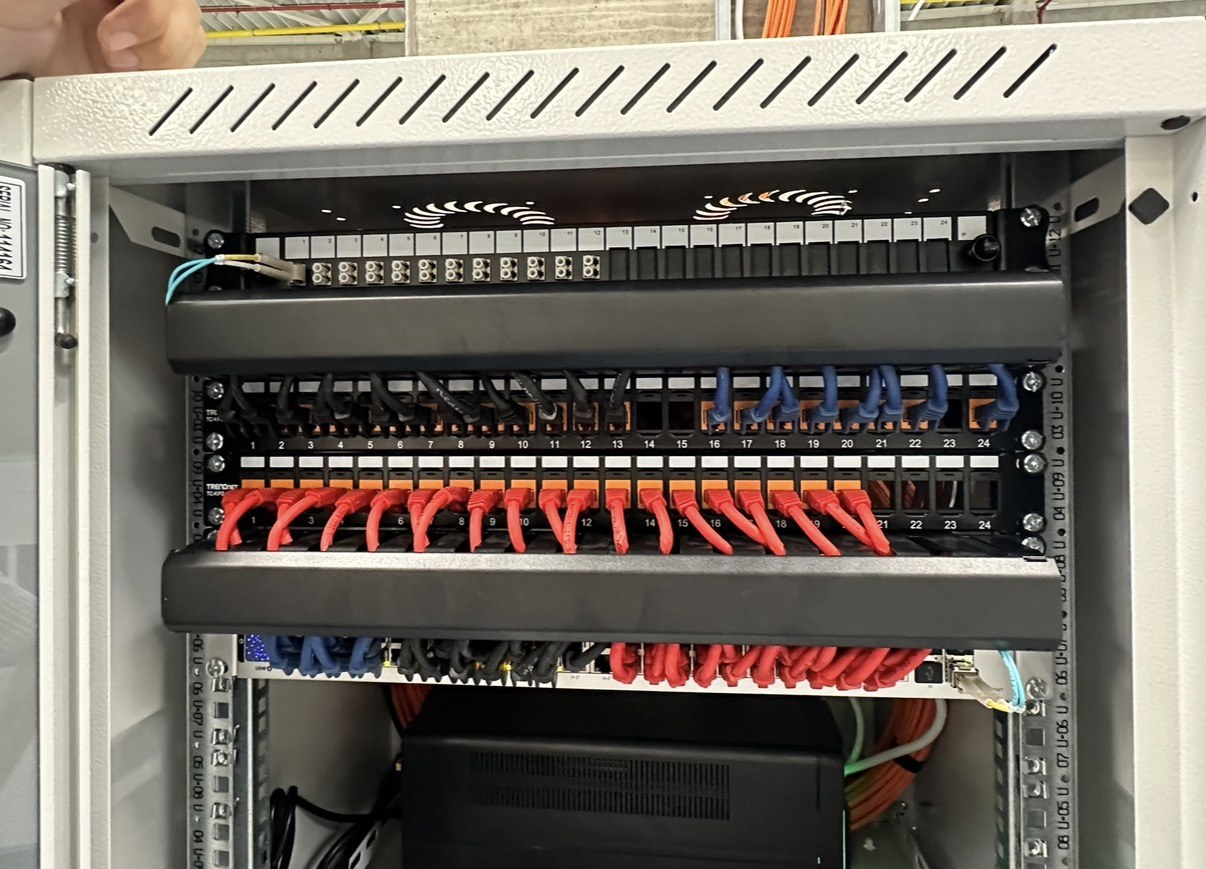
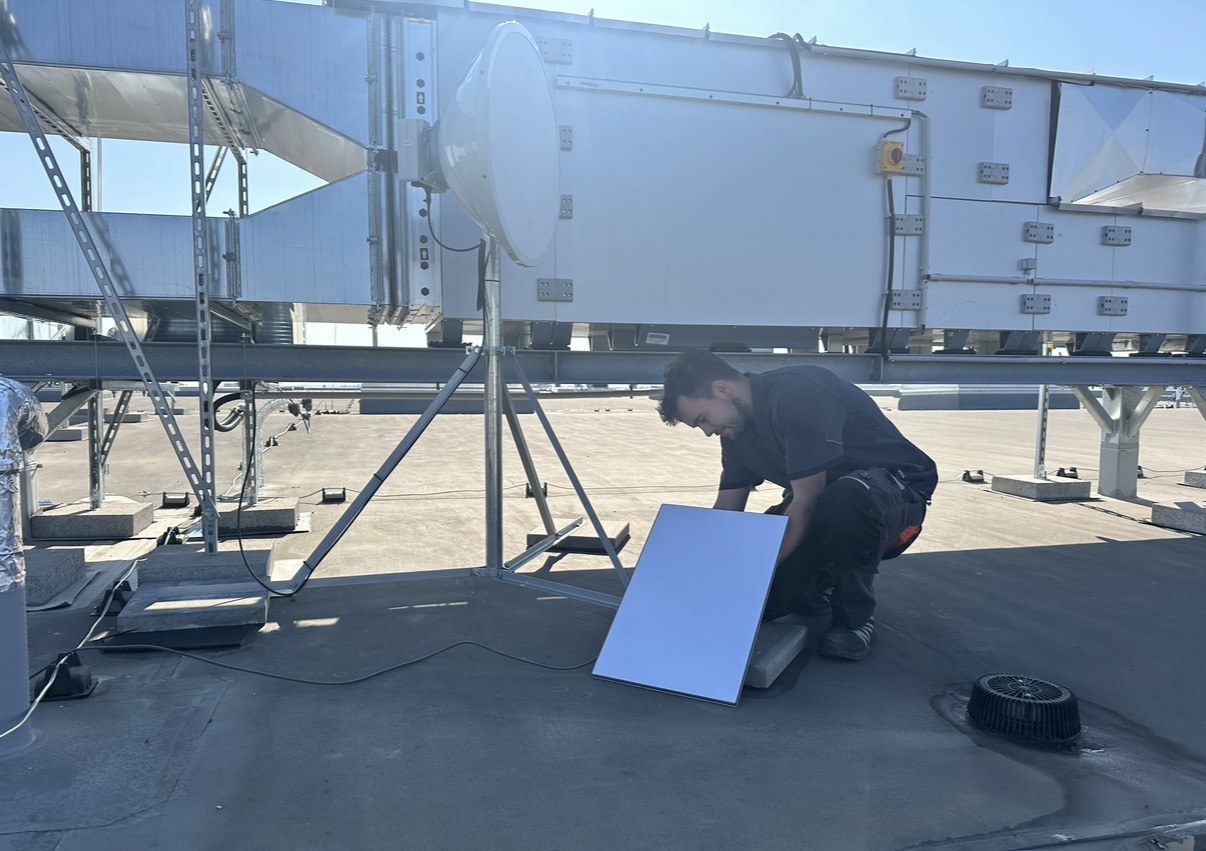
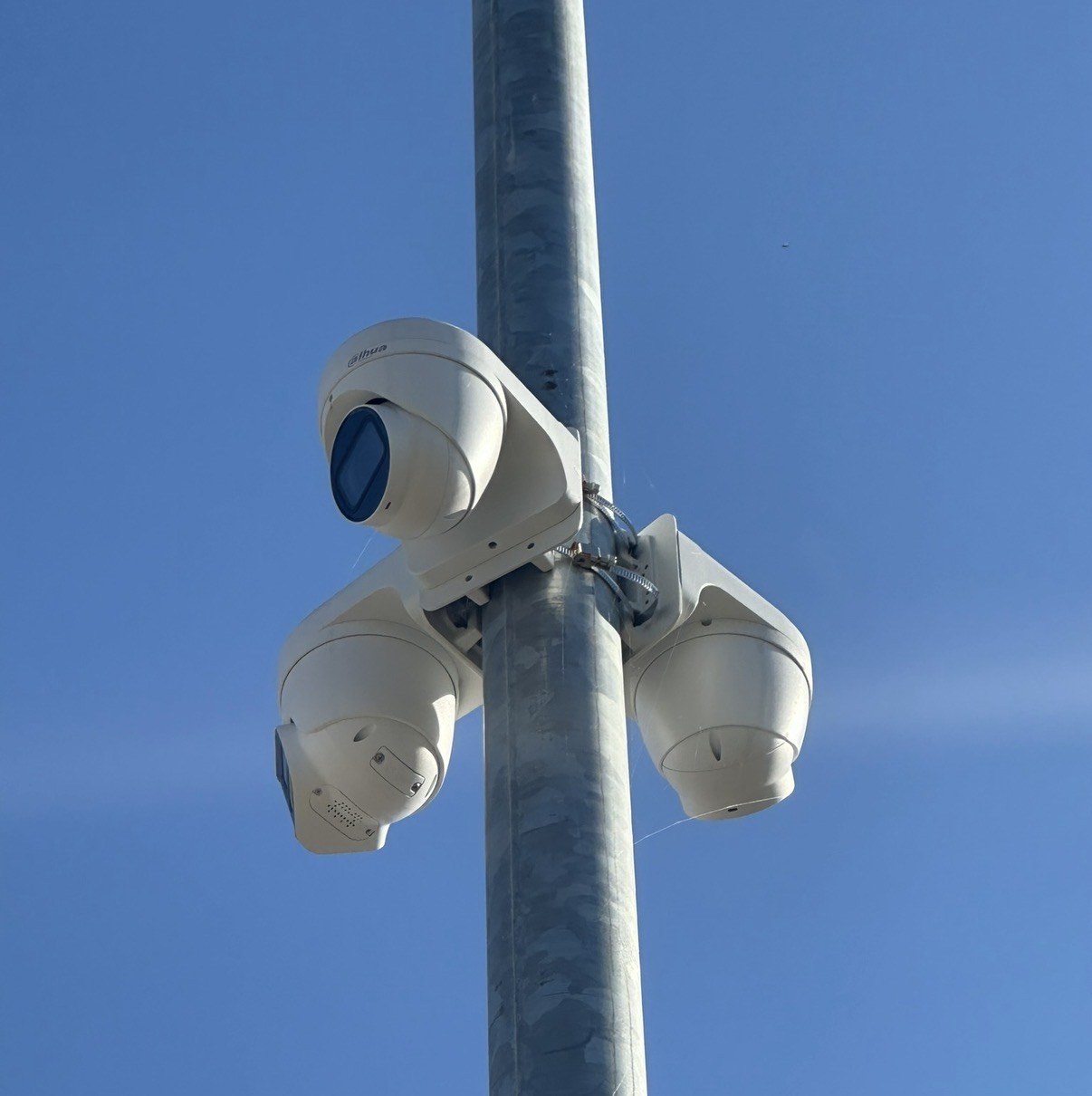
From fibre to camera image, in four layers
A hub like this is not a stand-alone camera system. It is infrastructure that everything runs over.
Why we do it this way, and what you get from it
On this type of installation we check the points below as standard. They decide whether a building still runs smoothly in five years.
Questions about working at several locations and abroad
Do you work outside the Netherlands?
Yes. For this client we worked in Belgium and Hungary, among other places, and we do the same for foreign companies opening a branch in the Netherlands. We send our own engineers, with our own materials and our own project lead.
Do we get one point of contact?
Yes. You have one contact for the whole project, in Dutch or English. You do not have to switch between a network company, a camera company and an installer, because those roles are all ours.
Can you meet a hard handover date?
That is what we plan for. You hear up front what you get, what it costs and when it is ready. When we report it ready, it is tested and complete, so you are operational on opening day.
Who does the maintenance afterwards?
We do. Because the network and cameras can be managed centrally and remotely, we look in from the Netherlands, adjust and solve many faults without a visit. Common parts are in our stock.
Why cameras and network from one party?
Because camera footage is simply network traffic now. If the network is right, the cameras, scanners, WiFi and controls work. Split that knowledge over several parties and a fault mostly leads to finger pointing.
Does this also work for a smaller location?
Yes. We use the same approach for an office, a warehouse or a business unit in the Netherlands. The scale differs, the method does not: first see what is needed, then a plan with a date, then do the work and test it.
More projects for international companies
Other projects where one team took care of the whole technical side.
Tell us what you want to achieve
Call, email or book a free advice call. We think along with you, in English, whether it is a home or a business, in your business location and beyond.